Welcome to The London Foodie


Reviews of London's Restaurants, Supper Clubs and Hotels, Wine Tastings, Travel Writing, and Home to the Japanese and French Supper Clubs in Islington

For the latest food events, restaurant openings, product launches and other food and drink related news, visit the sister site The London Foodie News
Showing posts with label Restaurant - Fish. Show all posts

Tuesday, 15 December 2015

Sutton and Sons - Great British Fish & Chips (and Much More) Now in Islington


Name: Sutton and Sons Fish & Chips (Islington Branch)

Where: 356 Essex Road, London N1 3PD, http://www.suttonandsons.co.uk/

Cost: Sutton & Sons’ eat-in menu offers traditional British fish and chips fare as well as a selection of interesting small bites and a number of daily specials. The Fish & Chip section includes battered scampi at £7.95, cod, haddock and other fish at £9.95, or monkfish at £12.95, with hand-cut chips at £2.75. 

Small Bites features king prawns in tempura batter £4.50, Cromer crab on toast £5.95, ½ dozen Maldon oysters £8.50, and Moules Mariniere £4.50 among other offerings. If you fancy something other than battered fish, the daily specials may include whole sea bass with herb butter £12.50, lobster sub & chips £12.90 or grilled tuna or swordfish £9.50. Set price menus for lunch are also available at £6.50, as well as smaller servings for the kids menu at £5.75 for cod and chips. The take away menu is cheaper.


About: A North London institution, Sutton and Sons Fishmongers was founded by husband & wife duo, Danny and Hana Sutton in Stoke Newington 17 years ago. In 2010 they opened their first Fish & Chips restaurant just across the street from their shop with a second, smaller branch, largely for home and office deliveries, opened at Boxpark Shoreditch a few years later.


More recently, a new Islington restaurant opened on Essex Road. Decked out in smart black and white tiles, with Tolix style chairs and wooden tables, subdued lighting and discrete jazz/rock on the sound system, it's an enjoyable spot to eat in, or wait for your takeaway to be prepared. All their food, whether eaten on the premises or for takeaway, is freshly cooked to order.


The fish is responsibly sourced, and is supplied to all 3 restaurants from their own fishmongers in Stoke Newington, so it couldn’t be fresher. Hana – aka Mrs Sutton – makes a range of home-made pickles and desserts exclusively for the restaurants which are rapidly gaining a deserved North London following!


What We Ate: We started with a couple of the small bites selection - Cromer crab on toast (£5.95) was beautifully presented and delicious, with a generous portion of shredded fresh crab meat seasoned with finely chopped red chilli, red onion and parsley.


The restaurant's own-made smoked haddock and cod fish cakes (£4.95) were also very good - the fish and potato filling was deliciously creamy (more akin to a Japanese Korokke) seasoned with mustard seeds, in a crispy batter, and served with an excellent, fresh tartare sauce (made on the premises).


And of course battered fish had to be ordered – I opted though for the monkfish and chips (£12.95) as opposed to cod on this occasion.


With a super fine, crisp batter and meaty flesh, the monkish was outstandingly good, served alongside proper chips, thick cut and perfectly fried - crispy on the outside but soft and meltingly tender on the inside.


The lobster sub and fries (£12.90) served in a buttered brioche bun was filled to the brim with large pieces of meaty lobster and seasoned with a delicious Mary Rose sauce spiked with paprika – heaven!


We had a side serving of Mrs Sutton's homemade pickles too - quail eggs, balsamic shallots and red onion rings (£2.25). If you get to try these babies when you visit Sutton and Sons, you will never go back to the jarred, ready-made variety, I assure you! They were sweet, sour and beautifully delicate, with a great hit of clove and cinnamon in the onion rings. They worked a treat as a palate cleanser between courses and at the end of the meal.


What We Drank: The restaurant serves red, white and rose wines by the glass or bottle, including a Picpoul de Pinet for £19.50, and an Argentinian Malbec for £18.50.  The Renard Barnier Champagne is priced at a very reasonable £34.50. Beers come from Hackney Brewery, as well as Fullers others. On our visit, we opted for the Fullers London Pride (£4.25 for 500ml), and the Hackney Brewery American Pale Ale (£4.50 for 500ml).


Likes: Top quality, super fresh fish and seafood, perfectly cooked proper chips, a good selection of wines and craft beers at sensible prices. We loved the Cromer crab toasties, the lobster sub, the fantastic chips, the super delicate and crispy fish batter, the sweet pickles…. the list goes go….

Dislikes: What's not to like?

Verdict: In a sea of chain and other lamentable restaurant options on Upper Street, Sutton and Sons is a very welcome addition to the dining scene in Islington. From cod & chips to whole grilled seabass or lobster subs, they do it all, and they do it well. And it is great value for money too. Very highly recommended.   

Thursday, 6 August 2015

The Richmond - Fish and Seafood Restaurant on Queensbridge Road, Hackney


Name: The Richmond

Where: 316 Queensbridge Road, London, E8 3NH, http://www.therichmondhackney.com/

Cost: Average spend - £35-£40 per person not including drinks. The menu is divided into 4 sections: "Raw" at £9-£10 featuring carpaccio or tartare of scallop, seabass, Sicilian red prawn or tuna. “Small Plates” from £7-£9, “Big Plates” divided into meat, fish or vegetarian options from £16 to £28 and “Sides” (£3.50-£4). Cocktails are unusual and inventive, with some interesting ingredients like hibiscus petals, agave and camomile-infused Pisco. They range in price from £8-£10.50.

About: The Richmond is a neighbourhood bar and restaurant in Hackney offering a number of cooked dishes but its focus is on British freshly shucked oysters and other raw seafood dishes. The cocktail menu is impressive and highly creative. 

Opened by Australian chef Brett Redman (formerly of The Pavilion Café in Victoria Park), who is now the executive chef at both The Richmond and at the Elliot’s Café in Borough Market. Redman is joined by American business partner, the fashion stylist Margaret Crow who was the major force behind the elegant restaurant décor.


The restaurant has a rather unassuming front but inside, the dining rooms and bar are tasteful in a striking, dominant red colour, with bare dark wooden tables and subdued lighting. The Richmond is not a ‘neighbourhood’ restaurant as we know it – this is a stylish eatery serving super fresh fish and seafood with prices to match anything in Central London. As the diners sitting at the table next to ours confided – they love coming to The Richmond, but this was a meal they had to save up for!


What We Ate: We started with a selection of “raw” dishes - the scallop carpaccio, with ajo blanco, elderflower oil and grapes (£10). The scallop was meltingly tender and super fresh, though I wished there was a little more of it at this price level. The ajo blanco (a chilled soup of almond, sherry vinegar, garlic, bread) was good but again there wasn’t much of it, and in my opinion it could have done with a little more acidity (more sherry vinegar) or garlic for flavour, to give the dish the lift it needed.


Better were the Sicilian red prawns with lemon and basil (£9) – creamy, fresh and delectable with a hint of lemon and basil, they were great but again not the most generous of portions considering the price tag.


Our favourite raw dish was the tuna tartare with aubergine, harissa and mint (£9). The aubergine tasted like a Levantine baba ghanoush- lightly crushed and bursting with flavour, this was a cleverly conceived dish.The combination of aubergine, spicy harissa and fresh mint against the raw tuna was a first for me but one I will definitely try and replicate at home.


Moving on to the “small plates” section of the menu, we went for the crispy prawns and lemon mayonnaise (£8).Marinated in milk and oats overnight then deep-fried, due to long soaking they were very soft and so eaten whole, head, shell and all! They were really delicious, and I highly recommend them.


I don't normally comment on the bread, but the version on offer when we visited was from Bread Peddlar (www.lbpedlar.com), and was excellent. From August 2015, I am told the restaurant will be baking its own sourdough bread.

From the “big plates”, we had the Nduja spiced seafood stew with pasta shells and aioli (£19). This dish, a medley of octopus, mussels and prawns served in a spicy and scrumptious broth, was probably the highlight of the evening - richly flavoured with meaty textures, this was a great dish and surprisingly well priced.


The Hake with Vesuvian tomatoes, chickpeas and samphire (£17) was also excellent, served in a velvety butter and tarragon sauce and fresh chickpeas (a rare thing to see these days) which were delicious although perhaps a little firm.


To accompany, we had a side dish of cauliflower cheese (£4) – this was wonderful with savoury blue cheese flavours and a lovely creaminess from the unpasteurized British Ogleshield cheese from their supplier in Bermondsey.


For dessert, we shared a banana tart with creme fraiche and macadamia (£6) and also some fantastic deep-fried Beignets, served with fresh peaches and custard (£7) on the side. They were both great – comfort food at its best.


What We Drank: There is a fairly large and well-thought out selection of natural wines, served by the glass or half litre, as well as sparkling wines and Champagnes. Natural wine specialist Isabelle Legeron has devised the restaurant’s wine list.

Entry level white is a Rousanne - Viognier blend from the Cotes du Rhone, priced at £29, and the entry level red is a Tempranillo from Castilla, Spain priced at £27. It's a well thought-out, exclusively European selection of wines. 

We started with a couple of refreshing cocktails - the Brit Spiritz (£8), featuring my favourite north London Kamm & Sons spirit from Holloway, elderflower cordial and natural sparkling wine. We also had the Richmond Fizz (£9), with Beefeater gin, fresh lime, Pedrino and egg white. Pedrino is another new London-based drink, an all natural blend of Pedro Ximenez, citrus botanicals, quinine and spring water, and 5.5% alcohol.


To accompany our food, we had a glass of two white wines. One by Alexandre Bain, La Levee, Pouilly-Fumé, 2013 (£9.50 per glass). Creamy, savoury, this was about as far from a generic NZ Sauvignon Blanc as it is possible to imagine.

From the "Orange" wine menu, we had the Cascini degli Ulivi, A Demua, Piemonte, Italy, 2010 (£9.50), a blend of Riesling, Verdea, Bosco, Timorassa, Moscatella. Rather like an oloroso sherry (lightly oxidized), this was a great accompaniment to the savoury octopus dish. 

Likes: The tuna tartare with aubergine was delicious, the nduja spiced octopus, and the beignette. For me, the perfect meal would start with Richmond Fizz, followed by tuna tartare, nduja spiced seafood stew and the deep-fried beignette for dessert. 

Dislikes: none.

Verdict: The Richmond offers excellent British fish and seafood, with great raw seafood options. The cocktails are well-made and strong using unique spirits and mixers. As a neighbourhood spot, The Richmond is as good as it gets. Highly recommended.

Tuesday, 26 March 2013

London Restaurant Reviews - Massimo Restaurant & Oyster Bar


Words and Photography by Charmaine Chow

Name: Massimo Restaurant & Oyster Bar

Cost: £148.50 for two including 12.5% service charge and drinks

About: Situated at the Corinthia Hotel on Northumberland Avenue, just off Trafalgar Square, Massimo is a new speciality fish and seafood restaurant and oyster bar in London.

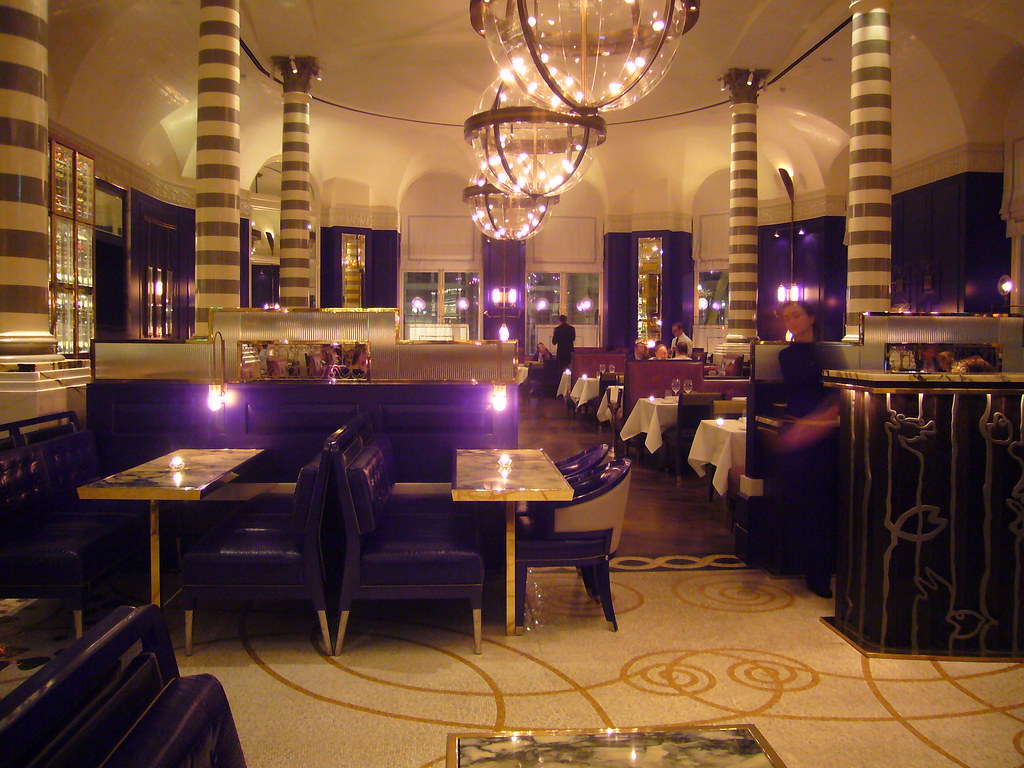
Designed by David Collins, the restaurant has an air of 1920s grandeur about it with its Corinthian columns, marble topped tables, dark wood panelling and elegant lighting. It is a visually stunning restaurant.

P1090318

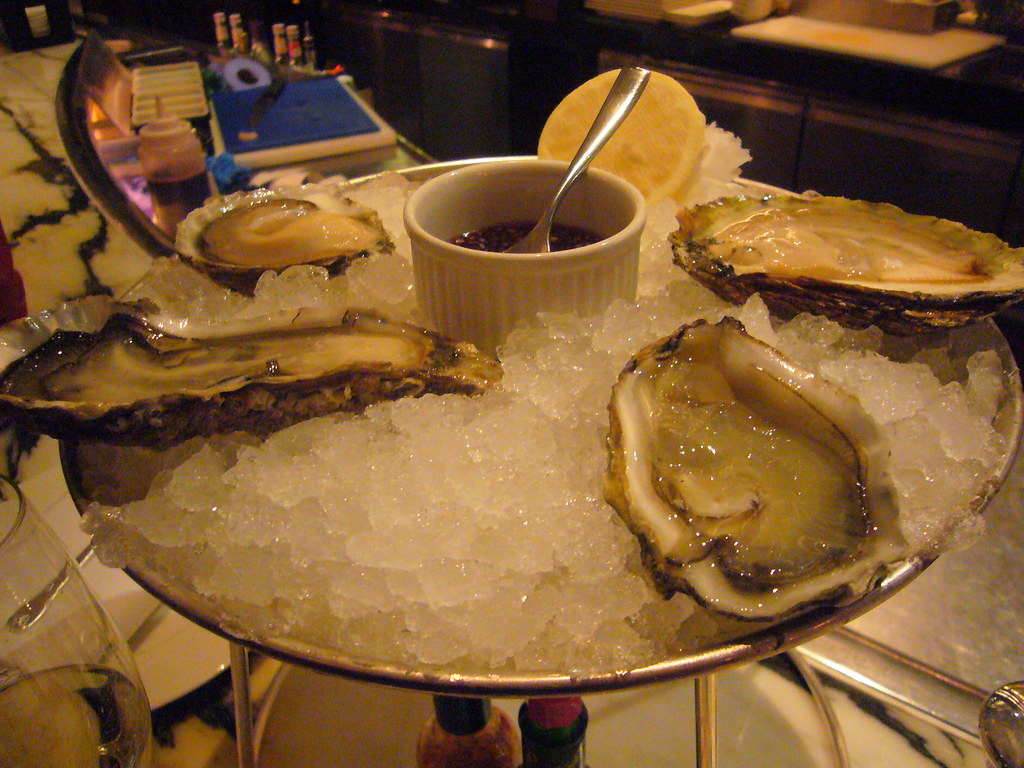
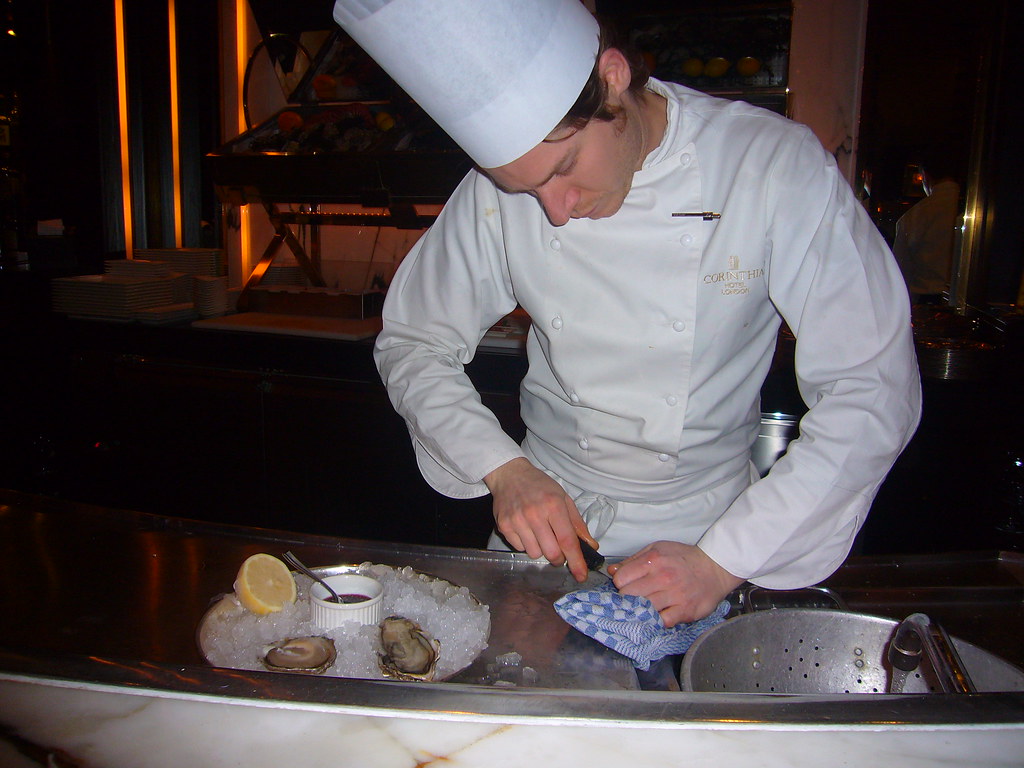
What We Ate: We started the evening at the crudo (raw) bar, where the crudo chef explained the different types of raw seafood on the menu.  We had a selection of oysters: Irish Rock (£3), Loch Fyne (£3), Loch Ryan (£4) and Falmouth Bay (£4), of which our favourite was the native Loch Ryan, which was a perfect balance of sweetness and saltiness.
  
P1090325P1090319

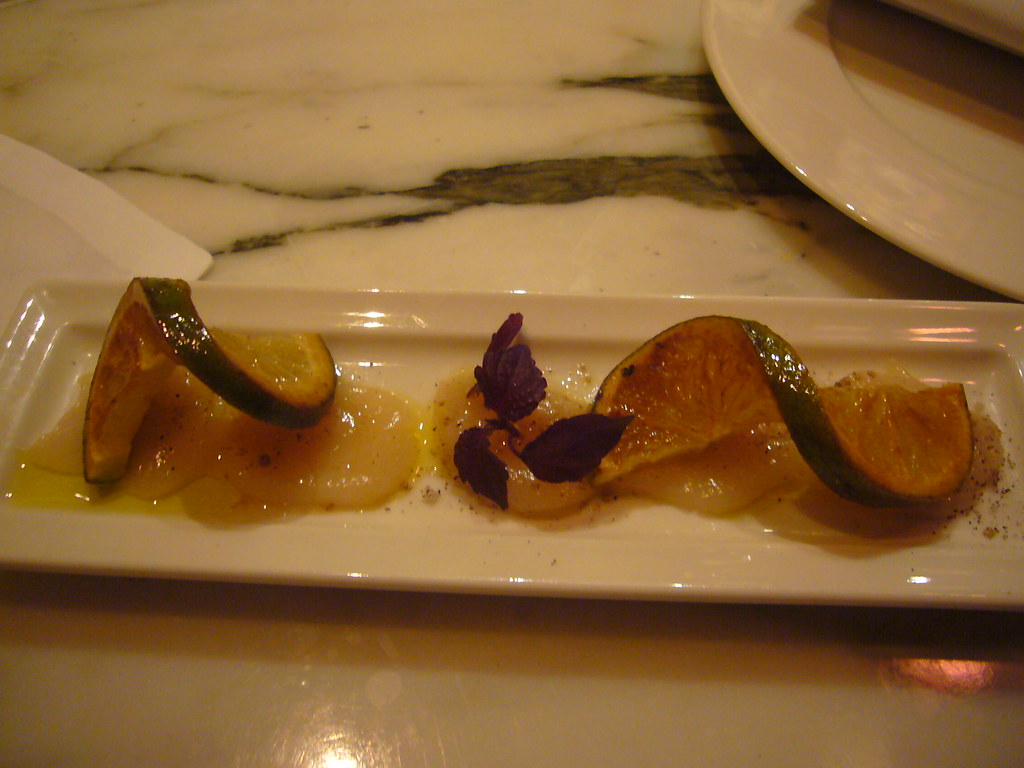
The second crudo dish we sampled was Sea Scallop dressed with Roast Lime, Vanilla and Sea Salt (£12). The scallops were very fresh, the lime juice was slightly bitter but balanced by the vanilla and salt. Definitely worth a try!

P1090322

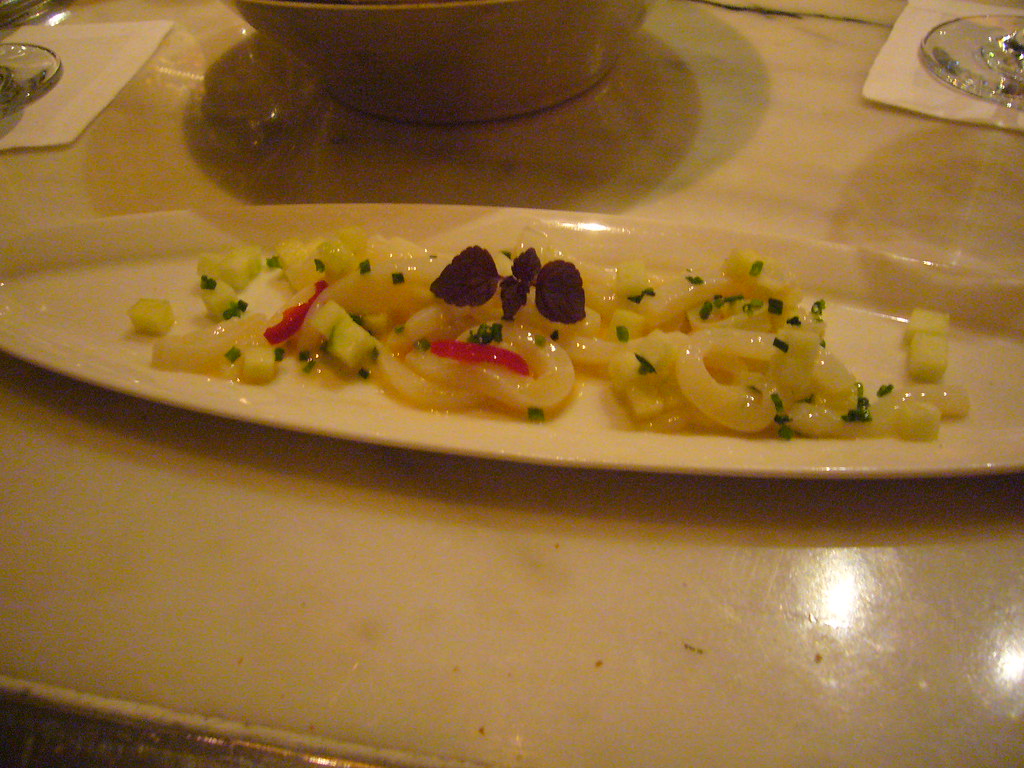
The crudo chef wanted us to try a new dish that he was hoping to launch.  Spicy stripped calamari with chives, fresh chilli, green apples and lemon juice (on the house). This was scrumptious but definitely not for the faint hearted as it was quite fiery.

P1090329

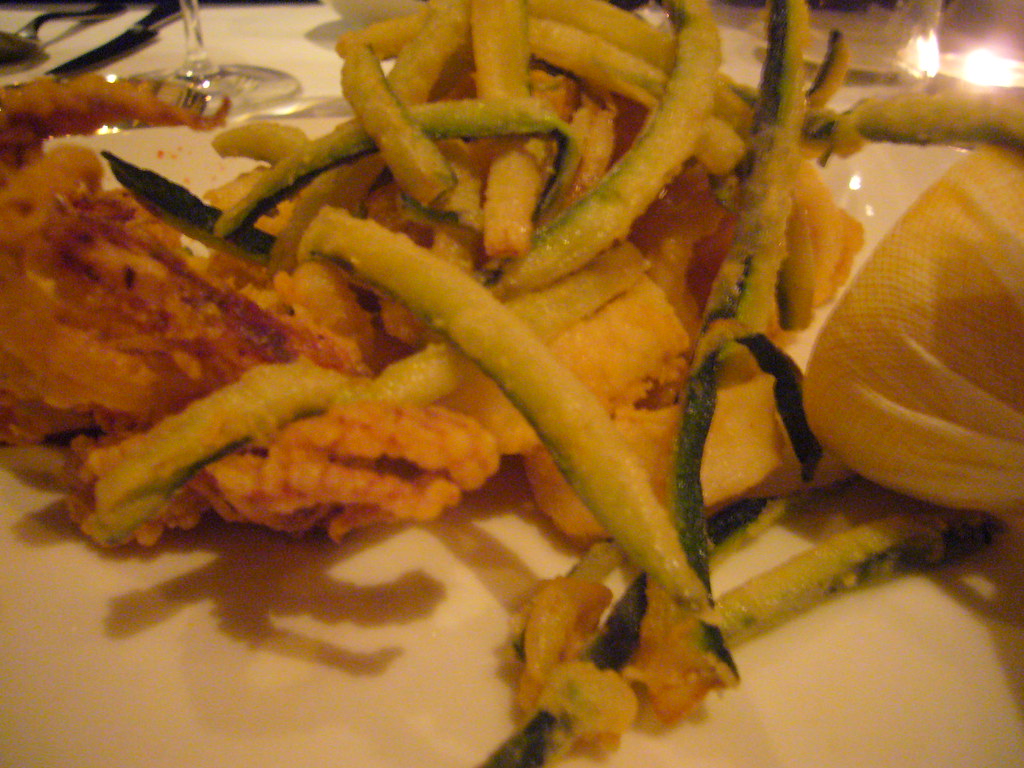
We then headed to the restaurant, where for starters, we shared a generous portion of calamari fritti (£12).  The batter was not quite golden but the calamari were perfectly cooked.  They were served with fried courgette strips which were disappointingly soggy. I’ve had better at Byron. We also had bean soup with roast garlic and thyme (£9), which was comforting on a cold night.  There was a delicious tang of roasted garlic infused in this rich creamy soup, which was served with some calamarata pasta and more beans - very good.

P1090342

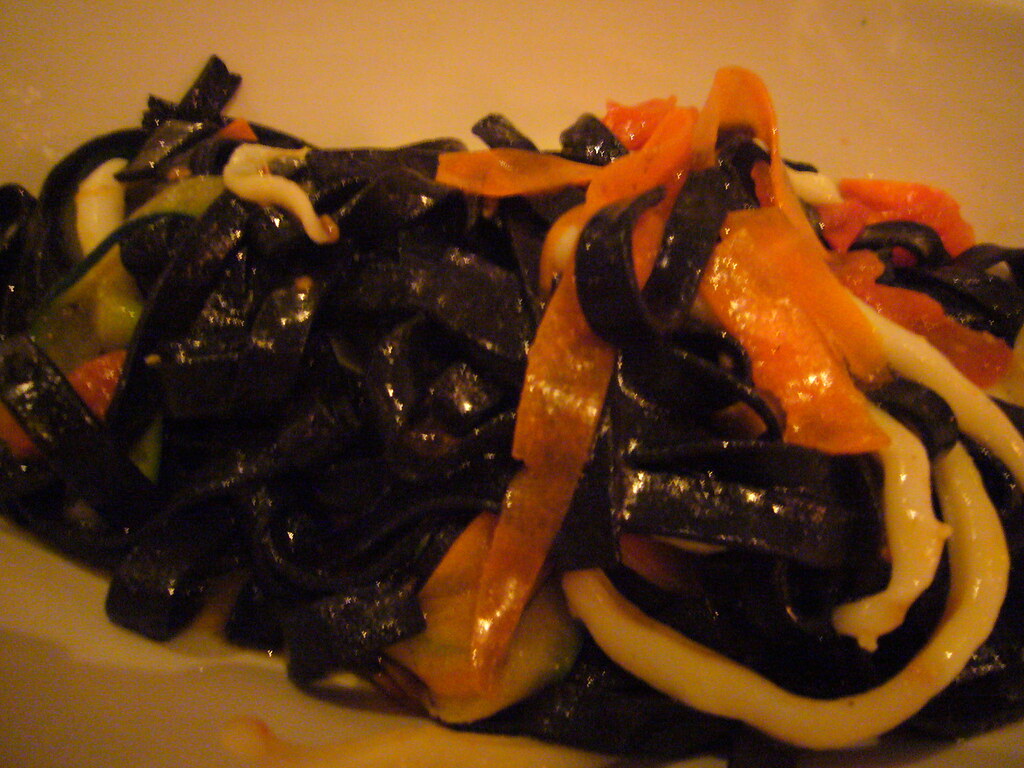
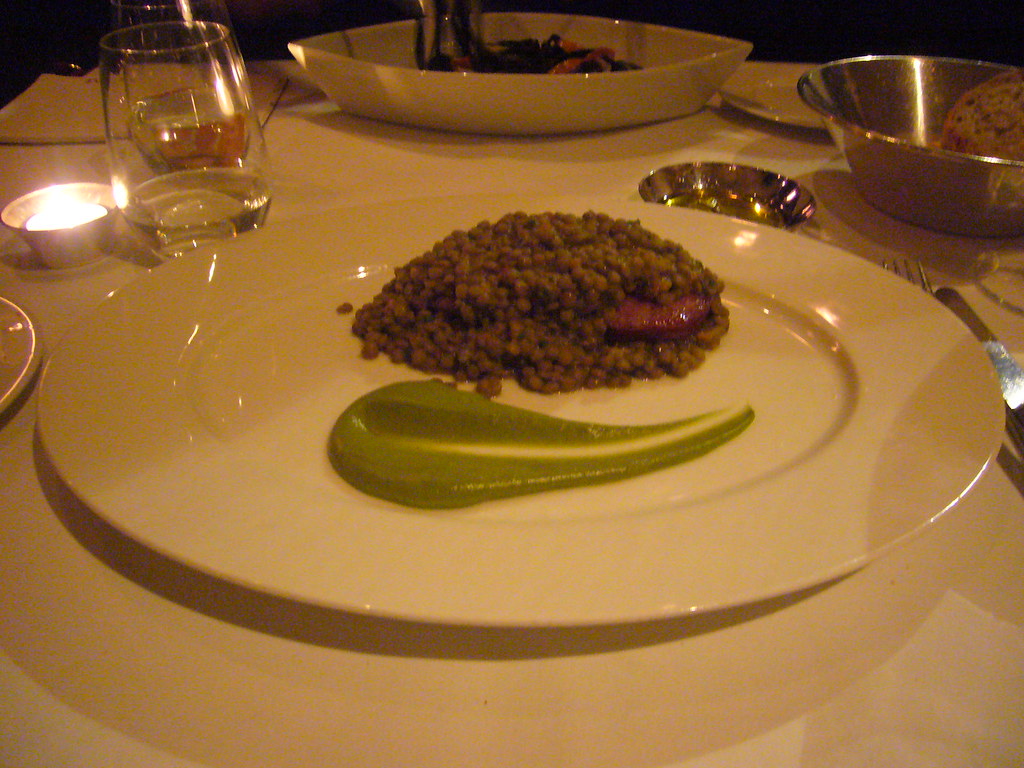
For the main course, we opted for black tagliatelle with squid, carrot and courgette (£17), and Cotechino sausage with cauliflower puree and lentils (£16).  The tagliatelle was definitely the best main option of the evening - the pasta was al dente and the fresh squid brought out the sweetness in the dish, while the Cotechino sausage was underwhelming in my opinion.

P1090346
P1090349
Ooops, where is my sausage??!

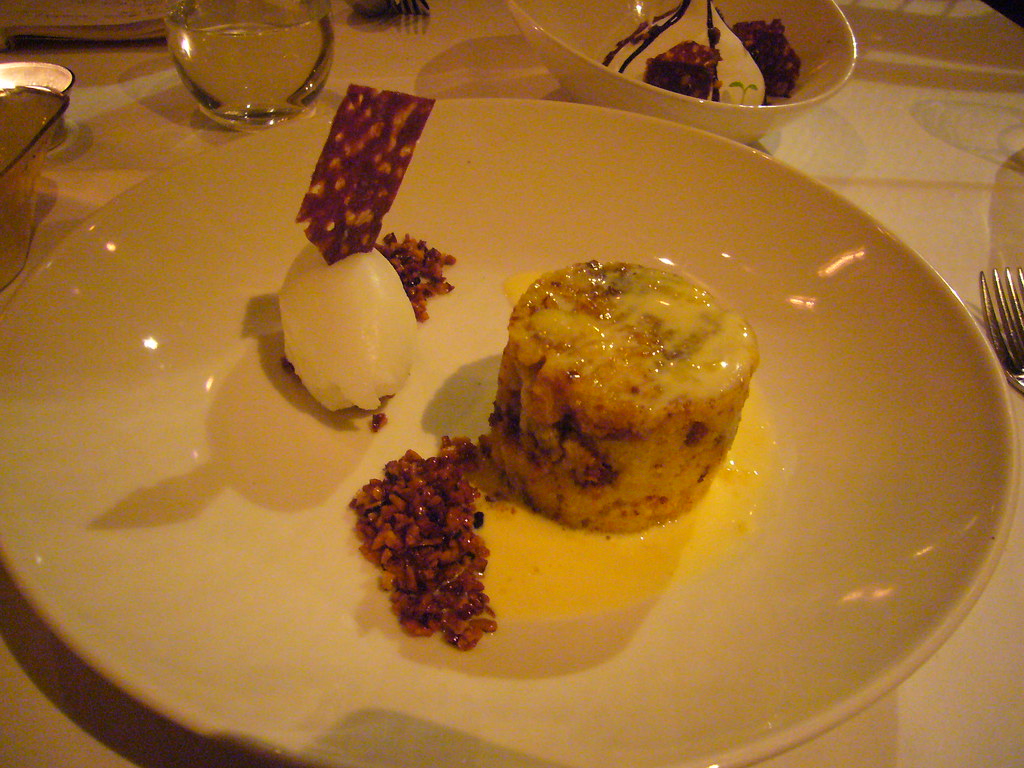
For dessert, we had Panettone bread and butter pudding (£8) served with a Latte di Mandorla sorbet, and Mont Blanc Pavlova (£8) which were both very good.
  
P1090356

What We Drank: a Bellini cocktail, a glass of Laurent-Perrier Brut Champagne (£14), two glasses of  white wine (Grillo Luma Cantine Cellaro from Sicily - £8).

Likes: beautiful bar and dining room, black tagliatelle with squid, carrot and courgette

Dislikes: somewhat inconsistent standard of cooking, impersonal (but efficient) service

Verdict: Good but pricey food, for special occasions. Try the pre or post-theatre options (£30 for a three course meal with a glass of prosecco) featuring dishes from the a la carte menu.

Massimo Restaurant & Oyster Bar
10 Northumberland Avenue
London WC2N 5AE
Tel: 020 – 7998 0555
http://www.massimo-restaurant.co.uk/

Wednesday, 7 November 2012

London Restaurant Review - The Oyster Shed


Words by Simeen Kadi

The Oyster Shed is perhaps not the best way to describe this fairly new bar restaurant in the City. Outside it is all steel and glittering glass in a fabulous location on the North bank of the river near London Bridge – so not a clapboard shack on some sandy beach. Inside it has been tricked out in that East Coast style that made Martha Stewart millions. But the enormous amounts of plate glass and the large outside deck area make full use of the great river views.

This is Geronimo Inns latest venture. The pub group has over 30 pubs and bars from large and glitzy in Westfield to olde worlde in Chelsea. Their shtick, so they say, is that they are food led, meaning they are inns that serve food with alcoholic beverages – in that order. Er, like a gastro pub, then.

Whatever they want to call themselves, I had a very enjoyable evening at the Oyster Shed and tried some pretty decent food too. Head Chef Mark Donlon wanted to talk to us about the seafood they use at the restaurant and give us a few handy tips along the way. And, of course there was plenty to scoff as well. We started at a large table groaning with oysters, scallops and other seafood.

The oysters were Jersey Rocks, chosen for their flavour and also because they come from the  cleanest waters in Europe. There were also scallops from Essex and farmed seabass from Anglesey. Chef Mark is certainly passionate about treating seafood with respect and insists on sustainably sourced, local and seasonal.

Whilst demonstrating the easiest (and safest) way to shuck oysters and scallops Mark talked about seafood, from the madness of EU by-catch and quota regulations to why we must eat much more oily fish (it's the omega 3, stupid.) And, of course, we all know that any fish for sale with sunken eyes and a strong fishy smell should be given a wide berth. Mark also showed us the cleanest way to fillet a fish, although I suspect the key element is having a super-sharp knife – something most domestic kitchens lack.

Mark showed us how to shuck oysters and then let us all have a go at shucking our own  and, since this was the only way we would get those juicy bivalves out of their shells and down our gullets, we fell to our task with gusto and the mountain of oysters was soon conquered. Meanwhile Mark quietly slipped away to prepare some scallops for us.

We were also treated to some of the other food served at the Oyster Shed. As well as the fish and chips (very well cooked fish in a good, crisp batter) there was salmon roe and crème fraiche, an excellent chicken liver mousse and perfectly cooked steak. Farmed salmon is cured in-house using beetroot for flavour and colour in their gravad lax. The company also smokes their own fish and the smoked salmon was delicate with much of the sweetness and richness of the fish intact and just a hint of smoke. We also tried some cod and haddock ceviche, cured for only 40 minutes (much longer and it starts to cook and go rubbery, says Mark) in lime and lemon juice as wellas tuna chunks (albacore, so OK on sustainability – for now) in soy and lime juice with cucumber.

Then the scallops reappeared in their new guise, a dish to feature in the restaurant's new Autumn menu. Tender slices of unctious pork belly were interleaved with slices of delicate scallop which had only briefly been shown the pan and so retained their sweetness and silky texture. Set over a cauliflower puree this was a dish both hearty and delicately flavoured – a perfect starter for the season.

Likes: Fabulous setting on the North bank of the Thames with great views – right across from the Shard.

Dislikes: The interior is a bit corporate, rather like an upmarket Slug and Lettuce but the food and the views more than make up for this.

Verdict: In all, I like what the people at Geronimo Inns are doing at the Oyster Shed. The seafood is well sourced and very fresh and the daily blackboard changes to feature the day's haul, so expect langoustines, brown shrimp and of course, oysters. At £1.75 each, the oysters aren't cheap, but this is the City. Wines and beers are very well priced and the wine list is definitely one of the restaurant's strengths

Oyster Shed: www.geronimo-inns.co.uk/theoystershed/ 
1 Angel Lane, London EC4R 3AB
Telephone – 020 7256 3240 
The Oyster Shed is currently only open from Monday to Friday

Monday, 20 February 2012

Food and Wine Matching Masterclass at Corrigan's Mayfair


One of the toughest problems when planning a meal is appropriately matching its dishes with wines. Just as bad wine can completely ruin a good meal, good wine can make an otherwise fairly ordinary one into something memorable.


Years of wine tasting and a recent WSET advanced certificate have opened my eyes to this complex area. As with many food and wine related topics, it is also a rather subjective matter. There are however a few principles one should bear in mind. One of the greatest misconceptions is that fish and chicken should always be served with white wines while red meats, particularly beef, should be paired with red wines.  The main issue is not the colour but the body of the wine. Whether light, medium or full, the body or weight of both food and wine should be carefully matched. So a Provençal chicken stew could go nicely with a bottle of red Grenache, much as a lightly chilled Pinot Noir might go with a seafood platter.  

Other considerations are the acidity of the food (for example tomato dishes are high in acidity, and match acidic reds such as Sangiovese, and fish dishes served with lemon go well with acidic whites like Sauvignon Blanc). Partnering of sugar levels is also important - as with sweet sherries like Pedro Ximenez, or naturally sweet wines like Sauternes or Saussignac matching with sweet desserts like ice cream or apple tart respectively. If you are stuck for a match, remember that wines are usually made to complement the local food, so regional wines will match their cuisines 9 times out of 10.


To  help us with this task, Richard Corrigan's Mayfair has teamed up with Les Caves de Pyrènes for a series of tutored masterclasses in which some of his signature dishes are matched with accompanying wines. At £120 per person, a fine glass of Grand Cru Champagne is offered, with canapés followed by a tutored four-course tasting menu.  For most courses, two different wines are matched and thoroughly discussed.


I was fortunate to attend one of these tutored meals recently, at Richard Corrigan's private dining room in Mayfair. The restaurant feels plush, with a grand piano dominating the entrance, and a restful colour scheme of beige, brown, red and gold.  The bar is marble-topped, with large flower displays, leather armchairs, and the whole feel is discreetly elegant and expensive.


The lunch was tutored by Les Caves de Pyrènes, an independent wine importer based in Guildford, Surrey which is a supporter of wines that are hand-made and naturally expressive of their origins. On this occasion, the tasting was about natural wines from the New World.  Natural wines are made with minimal chemical and technological intervention in growing the grapes and turning them into wine. They can be organically or biodynamically grown, are hand-picked, and have no added sugars, foreign yeasts or adjustments for acidity. They have minimal  or no fining and filtration or added sulphites.  My experience of natural wines has been mixed, and some have not been successes.


At Corrigan's Mayfair, we kicked off with a delectable platter of canapés served with a glass of Paul Dethune Grand Cru Champagne - a fine biscuit nose making for a very good start indeed. This was followed by an excellent starter of lobster raviolo with shellfish broth, served with sea purslane. The broth was intensely flavoured yet delicate, and the pasta generously filled with chunks of lobster that were well matched with the salty, crunchy sea purslane.


To match, we had 2009 Testalonga El Bandito Cortez from Swartland, South Africa - a wine made from old Chenin bush vines, and made the old-fashioned way by foot pressing!  It was a delightful wine, but in my opinion the better match with the food was the 2009 Pyramid Valley, Fields of Fire, Chardonnay from New Zealand. With a wonderful nose of nuts, green figs and vegetal notes, this wine had a lovely richness and minerality with good acidity and texture.


Our next course was a red wine braised brill served with confit cabbage, celeriac & razor clam.  I loved the presentation of this dish, and the artistry and flavour combinations resulting from braising white fish with red wine, and the two types of shell fish.


To accompany this dish, we were served a glass of 2010 Carignan Reserva from Villalobos, Colchagua, Chile (served slightly chilled).  This was a pleasingly light red almost like a dark rosé, aged in French oak, with clean fruit flavours. The better match, however, was the 2010 Pinot Noir from Louis-Antoine Luyt, Maule, Chile. A tiny winery in the Maule Valley, the French wine maker Luyt is the only significant wine maker in Chile following the rigorously anti-industrial approach to wine making  implicit in natural wine.  His efforts have paid off, with his 2010 Pinot Noir showing a lovely depth of redcurrant fruit with light tannins - it was a perfect match to the brill.


The Goosnargh chicken with wild mushrooms and English leeks was next - a very succulent piece of corn-fed chicken from Goosnargh in Lancashire (championed by Gordon Ramsay), served with an intensely creamy mushroom sauce.  This was the Rolls Royce of chicken dishes, served with a glass of 2010 Burnt Cottage Pinot Noir from Central Otago, New Zealand.  Central Otago is highly prized for its pinots, and this one did not disappoint, with aromas of red fruit and orange peel, and a pleasing natural acidity. Equally good was the 2010 Wildman Pinot Noir, Adelaide Hills, Australia - complex and refined, it had a velvety richness while remaining bone-dry.


For dessert, we had rhubarb crumble soufflé, served with a delicious stem-ginger ice cream.  This was a light and refreshing dessert with a good balance of tart and sweet, but how to partner a wine with this combination?  Once again, the tutor came up with the goods, proposing a glass of 2010 Framingham Noble Riesling from Marlborough, New Zealand.  A botrytised sweet wine, it had the high acidity characteristic of Riesling, giving a refreshing quality that perfectly matched the astringency of the soufflé.


If you would like to learn more about the subject of matching food and wine, Corrigan's Mayfair will be holding further masterclasses on this theme on Friday 2nd March (dinner), Saturday 21st April (lunch), and Friday 4th May (dinner).  To learn more about these events, which can also be purchased as a gift, click here www.corrigansmayfair.com/classes, or contact privatedining@corrigansmayfair.com.

Cost: £120 per person for champagne & canapés followed by a tutored four course tasting menu including all wines.

Likes: Some of the best natural wines I have ever tried.  Having a tutored event makes for a very special gastronomic and educational occasion. Very elegant restaurant, friendly service.

Dislikes: None

Verdict: Top notch food matched with excellent natural wines, in very elegant surroundings.  Although at £120 per person it cannot be regarded as inexpensive, for cutting edge wine and food with an expert to teach about natural wines and how to partner them with food, I think this is excellent value. Very highly recommended. 

Corrigan's Mayfair on Urbanspoon

Sunday, 27 February 2011

London's Best Hotels - Andaz Hotel Liverpool Street


One of the more exciting aspects of running a food blog is that I sometimes get invited to restaurants and hotels in and around London, and have the opportunity to meet and chat with their chefs and owners. Such visits may not always reflect what a paying customer might encounter but they do offer a revealing insight into what these businesses are about and what they can offer.


I have cycled past the Andaz Hotel in Liverpool Street for years on my way to work without giving it much thought, possibly because it is a hotel, and I have always thought of hotel restaurants as options purely for tourists or business travellers. This common held view is now being challenged by a number of excellent hotel restaurants, such as Bar Boulud (Mandarin Oriental), Bistrot Bruno Loubert (Zetter Hotel), and The Petersham Hotel Restaurant to name just a few. The 1901 Restaurant at The Andaz Hotel is my latest find.

The Andaz Hotels are the boutique arm of the giant Hyatt Group. The London branch occupies the premises of the former Great Eastern Hotel, adjacent to Liverpool Street Station. Arriving 15 minutes early, I had some time as I waited in the lobby to soak up the atmosphere, people watch and see how the staff went about their business. With no formal reception area, the same member of staff would greet, check in, and take guests to their rooms. It felt like a much more personal experience than is usual in hotels of this size.


To start, I was given a tour of the hotel, shown a few rooms and some of the other amenities. The rooms were modern and elegant, mostly decorated in sober white, black, and red colours, with dark wood and leather. The biggest pull for me however was to learn that the hotel had a series of restaurants and bars, through most of which we would pass during the evening!

After the quick tour, The Champagne Bar was our first stop. Here we had some fine Perrier Jouet Champagne, and a selection of scrumptious sushi and sashimi platters specially made by the hotel's Miyako Restaurant. I seldom have the pleasure of drinking Champagne together with Sushi, but felt the combination worked extremely well. The fine biscuit and brioche aromas of the Champagne were the perfect accompaniment to the fish and sweet sushi rice.


The sashimi platters had some ultra-fresh and creamy pieces of salmon, seabass, tuna, prawn and mackerel @ £17.00. We also had California, Prawn Tempura, and Salmon and Avocado inside-out rolls all priced @ £7.

Our next stop was Catch - the seafood restaurant.

Here, we had a delicious starter of South Devon Crab Cake and Consommé @£10, followed by Steamed Norwegian Cod @ £22. These were cooked by Head Chef Martin Scholz, who came out to greet us.


The food was beautifully matched with a 2008 Margaret River Viognier, (Stella Bella, Western Australia), and a 2008 Chablis Premier Cru Montmain from Louis Michel et Fils. These were excellent examples of their type, expressing the fruit and terriors characteristics of these grapes and regions.


To finish, we headed for the hotel's fine dining option, the 1901 Restaurant. Here, we had a course of cheese and wine tasting (starts from £45 per person).


Of the many fine wines we had for this course, some of the more outstanding were in my opinion the Ma Mas Amiel Prestige, 15 Ans d'Age, and a 2008 Toscano Rosso IGT "Tuttobene" from Tenimenti Angelini.


The dessert was an exquisite mille-feuille with pear, red currants and spun sugar, served with an excellent 2008 Coteaux du Layon, from Domaine Phillippe Delesvaux at Saint-Aubin.


The two other locations which I had the chance to visit were the George Pub, traditionally English with oak panelling and a fine selection of ales, and the Eastway brasserie where diners can have a casual bite to eat.

I was pleased to have been invited to the Andaz Hotel, and to discover what a beautiful place it is, and explore its range of restaurants and bars. I would not hesitate in recommending it to family or friends who want to stay in the area. Its proximity to Brick Lane, Hoxton, Columbia Road and Spitalfields makes it an interesting alternative for visitors wanting something beyond the West End experience.

Cost: The London Foodie was a guest of the Andaz Hotel Liverpool Street. The hotel has 5 restaurants/bars to accommodate a range of budgets, although prices reflect location and the high standard of service, food and wine.

Likes: Great sushi, Champagne bar, and an outstanding wine list. The cheese and wine tasting course will certainly get me back. Personable service, convenient location for a drink after work in the Square Mile, and an alternative to the madness of the West End.

Dislikes: The City corporate types which the hotel may attract might not make for the best environment for a relaxed or romantic evening out.

Verdict: Cool elegant hotel in a central location, with a range of good restaurants and bars. Good quality sushi, Champagne bar and wine list. Highly recommended.
1901 on Urbanspoon

Catch & Champagne Bar on Urbanspoon
Related Posts with Thumbnails