skip to main |
skip to sidebar
Welcome to The London Foodie
Reviews of London's Restaurants, Supper Clubs and Hotels, Wine Tastings, Travel Writing, and Home to the Japanese and French Supper Clubs in Islington
For the latest food events, restaurant openings, product launches and other food and drink related news, visit the sister site The London Foodie News
Name: Dine & Stay at The Goring Hotel and The Dining Room
Where: 15 Beeston Place, London SW1W 0JW, http://www.thegoring.com/food-drink/the-dining-room/
Cost: The Dine & Stay Package priced at £520 for two includes overnight accommodation, a three-course dinner for two in the Goring Dining Room and a full English or continental breakfast.
For those who do not want an overnight stay but still enjoy a meal at The Goring, there is a three-course lunch menu at £49.00 or £55.00 on Sundays. The three-course dinner menu starts from £60.00, and there is also a two-course pre-theatre menu priced at £35.00.
About: Built by current owner Jeremy Goring’s great-grandfather Otto in 1910, The Goring has been run by the eponymous family since it opened. The Goring remains a favourite address for international travellers and locals alike seeking a quintessentially British luxury hotel in the centre of London, close to Knightsbridge, Mayfair and Sloane Street.
The closest hotel to Buckingham Palace, The Goring has been a firm Royal favourite since it first opened its doors. The coronations of George VI and Queen Elizabeth II saw the hotel filled with royalty attending from all over the world. More recently, Kate and William chose it as their hotel for friends and family attending their big day.
With 69 luxurious suites and rooms, each uniquely decorated, and public rooms with fine English furniture, Gainsborough silks on the walls and sparkling chandeliers, The Goring exudes the chic of a grand country house.
The hotel is rather intimate, with just one restaurant, the elegant Lounge Bar where afternoon tea is served (which I hear is fantastic) and a fitness centre.
Awarded a Royal Warrant for hospitality services in 2013, The Goring is the only hotel to be recognised in this way.
The London Foodie was at The Goring to experience and report on their Dine & Stay deal, which includes overnight accommodation, a three-course dinner for two in the Goring Dining Room, and a full English or continental breakfast.
Ours was a comfortable garden room, elegantly but not ostentatiously furnished with salmon-pink silk-lined walls, plush cream carpet and upholstery, and a smattering of cute cuddly toys.
The marble bathroom was kitted out with ultra-soft Egyptian cotton towels and bathrobes. The bed was comfortable and I had a great night’s sleep, but best of all was the view of the stunning private garden on opening the curtains in the morning.
What We Ate: Awarded its first Michelin star as recently as September 2015, The Goring’s restaurant, The Dining Room, is headed by Executive Chef Shay Cooper, and as might be expected, he is a real champion of British ingredients and cooking.
The Dining Room was designed by Viscount Linley (the Queen’s nephew) - restrained and elegant, the room has plain white walls but for a few coats of arms and two strategically placed bouquets of flowers. It is a large, airy room with luxurious cream-coloured carpets and chairs, and plenty of natural light.
This was the perfect spot to enjoy a glass of refreshing Billecart Salmon Rosé from the restaurant’s Champagne trolley. I love the idea of a Champagne trolley – it excites me nearly as much as a cheese trolley, but more on that later.
There were so many starters on the menu that tempted me, that I was torn between choices. But one dish just had to be ordered – The Goring’s signature Eggs Drumkilbo.
The Queen Mother’s favourite, Eggs Drumkilbo was invented at Drumkilbo, a grand house in Perthshire, Scotland in the 1950s. Not your everyday prawn cocktail, this fine seafood concoction was a light mélange of lobster chunks and langoustine, soft quail egg, an aspic of seafood consommé, topped with fine radish slices, micro herbs and caviar. This was heavenly – refreshing, delicately seasoned and exquisitely textured.
Our second starter was equally impressive - luscious poached Loch Duart salmon against crispy rock oyster tempura, served with a smattering of cucumber and green pepper brunoise, all brought together by a delectable oyster mayo.
Indecisive as I was in my choice of starters, I was thrilled to see my runner-up choice of beef tartare sent with compliments of the chef as an extra dish! This was a delectable number, made from hand-chopped Hereford beef fillet, seasoned with beer-pickled onions, mushroom ketchup, all topped with Parmesan and baby rocket.
The salt marsh lamb came as two perfectly cooked cutlets, with preserved lemon, grilled leek heart and a velvety smoked garlic potato mash.
Better still was the saddle of Cumbrian fallow deer, served with roast Jerusalem artichoke, cavolo nero, venison sausage and curled pork crackling, pine nuts and quince dressing. This was a well-conceived dish, not only for the quality of its British ingredients, but also for how artfully and seemingly without effort all this came together.
The cheese trolley at The Goring is a thing of beauty. Crammed with a delectable spread of artisan British cheeses from every corner of the isles, I just couldn’t resist it.
Offered as a dessert option, I begged the waiter to let me have it as a pre-dessert course on its own, and judging by my experience I would urge you to do the same. It will cost a little more but it’s money well spent. It was hard to choose among the dozens of options but we had five choices each of hard, blue, goat’s and sheep’s cheese.
And now to dessert proper. The bitter chocolate ganache served with milk jam and milk ice cream was rich, not overly sweet, and just the right size.
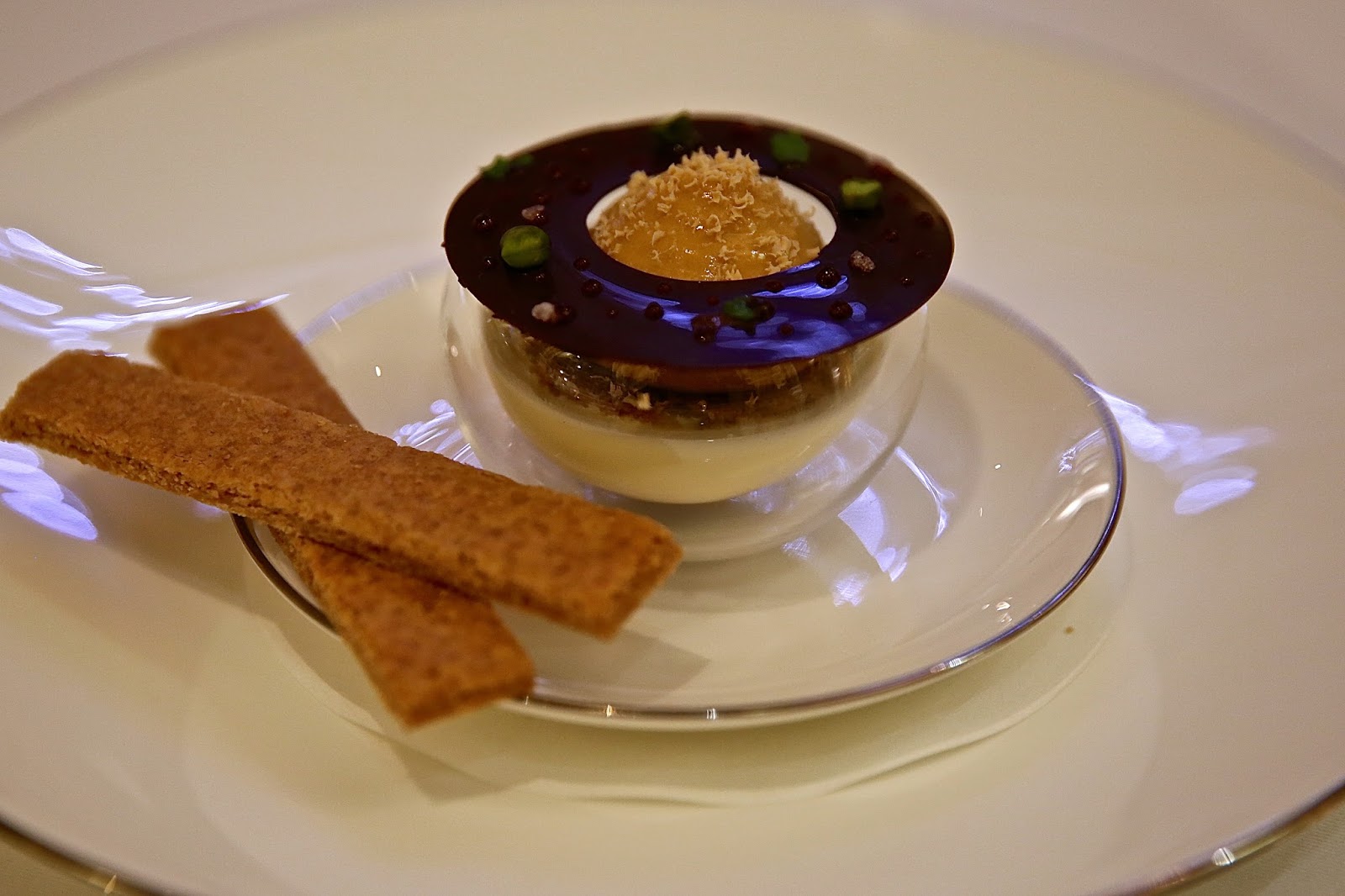
Also excellent was the black fig trifle - gorgeously presented, it was served with gingerbread, caramel and creamy buttermilk. Atop was a paper-fine ring of dark bitter chocolate studded with green pistachios and candied fruit.
I was glad I did not have far to go after this meal, but to climb a flight of stairs to my room at The Goring and fall straight into bed. I don’t about you, but whenever I have a large meal in the evening I wake up starving next day. And how fortunate that breakfast awaited so close at hand.
As part of the Dine & Stay package, guests can have either a continental breakfast (fresh juices, hot beverages, cheeses and ham, and a selection of breads and pastries) or a traditional English breakfast served in The Dining Room.
The latter included all of the above, plus a cooked option, and this was my choice. This was the full, traditional English breakfast, but a far cry from its greasy spoon cousin. With Burford Brown fried eggs, Lincolnshire pork sausage, bacon, black pudding, grilled tomatoes and mushrooms, it was a paean to all that is great in today’s British food and agriculture, and I savoured every mouthful of it.
Likes: The Queen Mother knew a thing or two about food as those Eggs Drumkilbo were the business! Our meal at The Dining Room was exquisite and at £60 per person, it was also excellent value. The cheese trolley was legendary.
Dislikes: None.
Verdict: The Dine & Stay at The Goring is the last word in British luxury hospitality. Chef Shay Cooper is at the top of his game and I cannot think of a better place to try some of the finest British ingredients and cooking right now in London. Very highly recommended.
Name: Kouzu
Where: 21 Grosvenor Gardens, Belgravia, London, SW1 0JW, http://kouzu.co.uk/
Cost: Starters range from £4.50 to £13, sashimi from £11 to £17.50, and sushi is offered individually, and ‘omakaze’ or chef selection platters ranging from £23 to £60. Cocktails are priced from £8.50 to £12. Entry level wines start from £25 for a Picpoul de Pinet or £22 for a Chilean Merlot. There is a good selection of fine wines with even finer prices.
About: Just a stone's throw from both Buckingham Palace and Victoria station, this restaurant opened in November 2014, with Chef Kyoichi Kai (formerly of Zuma and the Arts Club) heading the kitchen.
The restaurant claims to have all-Japanese kitchen staff, but walking past the basement kitchen I could not help but notice a lot of westerners working alongside the Japanese. Not that I mind, but it seems an odd claim to make if it isn't correct.
Housed in a grand historical grade-II listed building dating from the 1850s, the restaurant has an impressive entrance with a massive chandelier, and a glamorous cocktail bar.
It has a Japanese-style simplicity to the design, with dark slate floors, top quality but unstained and unvarnished tables, and restrained cream and grey fabrics for the blinds, benches and chairs, with a few prominent displays of orchids.
What We Ate: From the ‘New Stream Sashimi’ section, we ordered the lime-cured seabass with a green pepper salsa (£13.00) - this was a stunningly presented dish decorated with micro herbs, chervil and pink peppercorns and served with semi-dried cherry tomatoes which worked surprisingly well with the fish. Although I could not taste much lime-curing in the seabass, the dish was very well balanced and one I would definitely order again.
Also from the 'New Stream Sashimi' section, we had the beef fillet tataki (£17.50) - this was a seared fillet cut into fine slices and served with a sauce of soy sauce, mirin and sake, and a generous serving of julienne salad. In fact the serving of salad was so generous that visually it rather obscured the beef. I enjoyed this dish though - the flavours were fresh and the meat was tender and of good quality.
For mains, we had two items from the charcoal grill selection – the lamb chops with spicy miso and the beef fillet.
The lamb chops with spicy miso (£12.00), was probably the best dish of the evening and at that price, incredibly good value too. There were two perfectly cooked lamb chops, pink and succulent, served alongside a gorgeous selection of char-grilled vegetables including courgettes, tomatoes, peppers and onion. The spicy miso was a great accompanying sauce with a lot of umami flavour and just the right amount of heat, complimenting the meat and the vegetables without overpowering them.
We also had a 200g beef fillet (£31) that came with a choice two of sauces – an European red wine sauce or a citrus Japanese ponzu dressing served with yuzu kosho (a condiment made from yuzu peel, chillies and salt) - we opted for the latter. Like the tataki starter, the beef was of excellent quality, well cooked, and delicious. My only criticism with it was that rather than being served with yuzu kosho as an accompaniment, I was given a spicy oroshi (a mixture of grated daikon radish and chillies).
To accompany our mains, from the small dish and salad menu, we chose the assorted mushroom salad (£11). This was truly impressive and included a selection of four different mushrooms - eringi, shimeji, shiitake and oyster mushrooms - as well as pine nuts, walnuts, radicchio and green salad leaves dressed with ponzu sauce.
We also ordered a selection of tempura, including prawn (£7.50 for 2), along with aubergine, eringi mushroom and asparagus, but sadly it never arrived.
As is customary in Japanese restaurants, a ‘shime’ (normally rice and miso soup) is served to end a meal. To that effect, we were served a chef’s platter of sushi including a maki roll and some nigiri.
The spicy California roll (£8), made from crab, avocado, cucumber, flying fish roe, and spicy mayonnaise was superbly made with a very fine layer of sushi rice rolled in shichimi pepper for the spicy heat.
The nigiri sushi were unagi eel (£4 each), and chu-toro (tuna belly), priced at £6.50 each. These were exquisite, but sadly quite steeply priced.
With our selection of sushi, we had three slices of yellowtail sashimi, served in a covered glass bowl (£11). Delicious though it was, again we felt this was not great value for money.
For dessert, we opted for the Tart au Mont Blanc with rum and raisin ice cream (£9.50). It may come as a surprise to those who have not visited Japan, but Tart au Mont Blanc is a very popular dessert there. The version on offer at Kouzu reminded me very much of examples I ate in Tokyo, and was superb.
We also had the dark chocolate mousse and apricot brandy sauce with hazelnut ice cream (£10.50), which again showed real patisserie artistry at Kouzu.
What We Drank: We started with couple of cocktails - the Yuzutini (£9), was a delicious variation on a familiar theme with intense citrus notes from Yuzu-shu (yuzu-infused shochu), Russian vodka and lemon. The Smoky Negroni (£11.50) was strong and well made from 12-year old Bowmore whisky, along with Campari, ume-shu (plum liqueur) and orange peel. I liked this Negroni although I felt that the whisky was too overpowering a spirit and I would have preferred it with gin.
To accompany our dishes, we opted for a bottle of Masi Valpolicella Classico Ripasso (£30). This was a straightforward wine, with vibrant red cherry notes on the nose and palate. A light, fruit-driven wine, it had very little tannin or complexity, but was very drinkable.
Likes: A perfect meal at Kouzu would start with one of the ‘New Stream’ sashimi dishes like the sea bass, followed by the wonderful lamb chops in spicy miso, ending with the delicious Mont Blanc dessert.
Dislikes: There is a night-club style background music, which seems a little out of place in a restaurant of this quality. The food is very good, but while the waiting staff are polite and attentive, they seem to understand rather little about the food they serve, but these were early days for the restaurant. They also, annoyingly, forgot to bring our tempura. Not all the dishes were served as described on the menu (grated radish instead of yuzu-kosho condiment).
Verdict: Great Japanese-European cooking with some inventive ‘New Stream’ sushi and sashimi on offer and fine patisserie. Well-conceived, Kouzu is a new Japanese restaurant in Central London to be reckoned with. Recommended.
Name: Ametsa with Arzak Instruction
Where: The Halkin Hotel, Halkin Street, Belgravia, London, SW1X 7DJ, www.halkinhotel.net
Cost: The tasting menu is priced at £105 or £145 with matching wines. We had the matching wine option.
About: Ametsa was formed in 2013 as a collaboration between the Como Hotel Group (of which The Halkin is a part) and Elena and her father Juan Mari Arzak, the founder of the legendary, eponymous 3 Michelin starred restaurant in San Sebastián, Spain.
I had a fantastic dinner at Arzak this summer, so was keen to see what the family is getting up to in London. It is the first time that the Arzaks have collaborated in a restaurant outside of Spain, and the opening was keenly anticipated.
It was surprising then to see a lukewarm reception after its launch, followed by a number of critical reviews. Issues were raised about what some considered to be the over-complexity of its modernist cooking - too clever by half - and also for the restaurant’s stark decor and the lack of atmosphere. In addition, the kitchen is headed by a relatively unknown chef trained by the Arzaks, and the fact that neither Elena nor her father were to be present in the kitchen, also raised a few other eyebrows. However, Ametsa has gone on to notch up its first star in the 2014 Michelin Guide announcement, so we decided to go with an open mind.
The decor is indeed quite stark, with plain white walls, very little artwork, and the ceiling is decorated with hundreds of glass test-tube like vessels filled with orange - yellow powdered spices. To me, the restaurant felt like the canteen of a modern art gallery, with bright lights and a minimalist style. While the focus should of course be on the food, at the tasting menu price, guests might expect a greater sense of occasion than Ametsa delivers.
What we ate/drank: We kicked off with a selection of small-eats (aperitivos) including chorizo wrapped in mango, deep-fried lotus root with a creamy fish mousse, kataifi (finely shredded filo pastry which looks like very thin vermicelli noodles) filled with scorpionfish cake and foie-gras and apple toasts.
They all tasted delicious and were well thought out in my opinion. I particularly enjoyed the contrasting textures and sweet/savoury flavours in the chorizo and mango combination. The kataifi was served on a metal spike, and eaten from a long wooden skewer, it again had an interesting texture and a delicate flavour. The lotus root slices were deep-fried and very crispy and worked well with the accompanying fish mousse. I loved the combination of foie-gras and apple on toast, creamily unctuous yet refreshing.
We opted for the wine flights to match the tasting menu. To accompany the ‘aperitivos’, we had a glass of rose cava ‘Gramona Argent’ Gran Reserva from Catalonia. Made from 100% Pinot Noir, this cava had a lovely scent of red berry fruit and vanilla, with refreshing acidity to cut through the rich foie-gras and fish dishes.
The ‘aperitivos’ were followed by 3 different starters (entrantes). The first was a “scallop with cassava soufflé” - the scallops were large, sweet and tender like top quality sashimi scallops I have eaten in Japan. They were served with a red 'mojo' (i.e.sauce) made from scallop roe. The 'soufflé' was a crisp purple shell similar to those I ate at Arzak, made from cassava flour mixed with fresh beetroot juice which provided a different texture to the dish as well as making the whole dish look a tad intriguing.
A more technically interesting dish was the Scottish king prawn with crispy rice vermicelli noodles, served on a spider crab stew San Sebastián style, with a rich sweetcorn soup. Garnished with petals, this had an intense bisque-like flavour from the cooked shellfish, and very well balanced by the rich sweetcorn soup.
The third starter, was a clever dish of egg with squid noodles. The egg had been cooked in a waterbath at 63 degrees for 30 minutes, then shelled, breaded and deep fried, and served on a bed of squid sliced into noodle-like slivers. The squid ink sauce had a richly concentrated, savoury quality bringing the various components together. This was one of my favourite dishes on the menu.
With the starters, we had a glass each of La Gitana Manzanilla and of Pastrana Single vineyard Manzanilla Pasada. I loved the refreshing acidity of both these bone-dry sherries, but the Pastrana had just a slight extra kick of intensity and fragrance reflecting its longer ageing.
We also had a glass of Albariño 2012- La Liebre y la Tortuga (the hare and the tortoise). Albariño is one of my favourite white wines made from the eponymous grape, coming from Rias Baixas in northwestern Spain, and this was an elegant example, with citrus fruit notes, good acidity and a rich finish.
The fish course (pescado) was grilled tuna loin with caper sauce . The tuna was served with a garnish of shallots stuffed with cantaloupe melon. This was a simple but enjoyable dish, the tuna very fresh, meaty and perfectly cooked although not as sophisticated in conception as the other dishes which preceded it.
To accompany the tuna, we had a glass of Silencis 2012 from Raventos i Blanc in Penedes. A blend of Xarelo and Chardonnay, this wine is partially oak aged and had a sufficient weight of green fruit to match up to the meaty fish.
The main course was Pichon con Perdigones (pigeon with shot). The pigeon breast and leg were succulent and very tender, and served with purple potato, butternut squash and the 'shot' made by spherification of rice vinegar and silver powder. It was served with 'sand' made from toasted pistachio and almonds. Molecular gastronomy has been around for a while now and for many has lost its appeal. Having said that, I admit that I still enjoyed the quirky, tongue-in-cheek quality of this dish, and the thought processes behind it.
We washed the pigeon down with a glass of excellent Gran Reserva Especial Cosecha 2004 from Castillo Ygay, Rioja.
The 'pre-dessert', was the much criticised 'moon stones'. Intended to simulate the moon, with 'stones' made from orange juice and Cointreau inside a cocoa butter skin, with 'craters' of red wine and soya sauce, and 'sand' of sesame seed and sugar. I am not quite sure why this divides opinion so much, I personally enjoyed the flavours in the dish, and thought it was creative and a bit of fun.
The ‘pre-dessert” (love the idea of pre-desserts) was followed by two desserts - a delicious clove custard with roasted pineapple ice cream and a wafer of burnt milk, and another, named ‘Passionate’ a refreshing passion fruit cake with with crème anglaise , crunchy milk and soft cheese ice cream. I enjoyed both desserts, they were light, refreshing and beautifully presented.
The desserts were served with a glass of Ariyanas Dulce 2007, from Bodegas Bentomiz, Malaga. A naturally sweet wine made by a Dutch couple who started their vineyard in 2003, this is made from the moscatel grape, and had lovely notes of honey and melon, but with plenty of acidity to prevent it from being cloying.
Likes: A delicious and rather generous tasting menu with a good choice of matching wines by resident sommelier Alvaro, having a pre-dessert followed by 2 delicious desserts was also a very nice touch.
Dislikes: The room is lacking in atmosphere, partly due to the starkness of the decor. This was also the case when I reviewed the previous incumbents of the space (Nahm, see review here).
Verdict: The food at Ametsa was very good and I am pleased to have tried it. Despite the lukewarm reviews and my recent experiences at two of the 3-Michelin restaurants in San Sebastián (including Arzak) I thought the standard of cooking at Ametsa was up there with what I had experienced in the Basque country. The style of 'molecular' or 'modernist' cuisines offered may not be everyone's cup of tea, but that chef Sergi Sanz and his team are highly talented I have absolutely no doubt.