Words & Photography by Matthew Brown and Luiz Hara
Name: Nipa Thai
Where: Nipa Thai, Lancaster Hotel, Lancaster Terrace, London, W2 2TY,
http://www.niparestaurant.co.uk/
Cost: From the a la carte menu, starters and soups are around £11-12, with salads and curries at £16-19. There are a number of special fish dishes - from scallops in a red chilli and coconut broth to crisp fried sea bass - though none costs more than £24. All desserts are £9. Nipa Thai also offers a number of set menus, from £35 per person for six shared dishes to £40 for eight, with a choice of Thai wine pairings at £20 per person.
About: Nipa Thai is one of a small number of Thai restaurants to have received the prestigious Thai Select award from the Thai government for the quality of its cooking. It also has 2 AA Rosettes, and is situated within the Thai-owned Lancaster Hotel with views over Hyde Park, making it popular with visiting Thai dignitaries. Head-chef Sanguan Parr brought her experience from the partner restaurant, Nipa, in Bangkok’s Landmark Hotel.
What We Ate: To begin, we ordered the Ruam Mitr - a sharing selection comprising several starters, the highlight of which was the chicken satay in a sweet and velvety homemade sauce, complemented by Thai fish cakes which were fresh and zingy with lime and coriander.
The Kao Krieb Pak Moh was also good - steamed rice parcels containing chicken, shallot and plenty of peanut, glistening like multi-coloured oysters on the plate, and eaten inside a crunchy lettuce leaf.
Next came a soup course, of Tom Kha Kai and Kaeng Jued Tao Hoo, both well made. I particularly enjoyed the Tom Khai Kai, containing tender chicken in a succulent coconut broth, made refreshing by lime and lemongrass. It is easy to miss out a soup course when ordering Thai food, but these dishes are a reminder that this is a mistake.
They were followed by an array of main course dishes. Pla Rad Prig featured fried seabass with crispy skin and succulent white flesh, with coriander, onion and chilli.
The Yua Ma Muang Poo Nim, a salad of soft-shell crab and mango, was also hot, but not as successful. The crab had crunch, but was over-battered and lacked flavour, and the mango salad wasn’t substantial enough to sooth the heat.
The curry - Phad Kiew Warn Ta Law - was better. Mixed seafood (including some large fat scallops) was served in a green curry with Thai aubergine and basil.
These dishes were served with Sanguan’s Phad Thai, named after new head chef Sanguan Parr. Sweeter than usual and with plenty of lime, this was as good as anything I have eaten in Bangkok. I also enjoyed the aromatic Kao Kati - steamed rice with coconut milk and pandan leaves.
Desserts are rarely the most interesting aspect of Southeast Asian menus, and true to form, the desserts at Nipa Thai were in my opinion a bit of a let down. The banana pudding was bland, and served with the tiniest dash of caramel sauce.
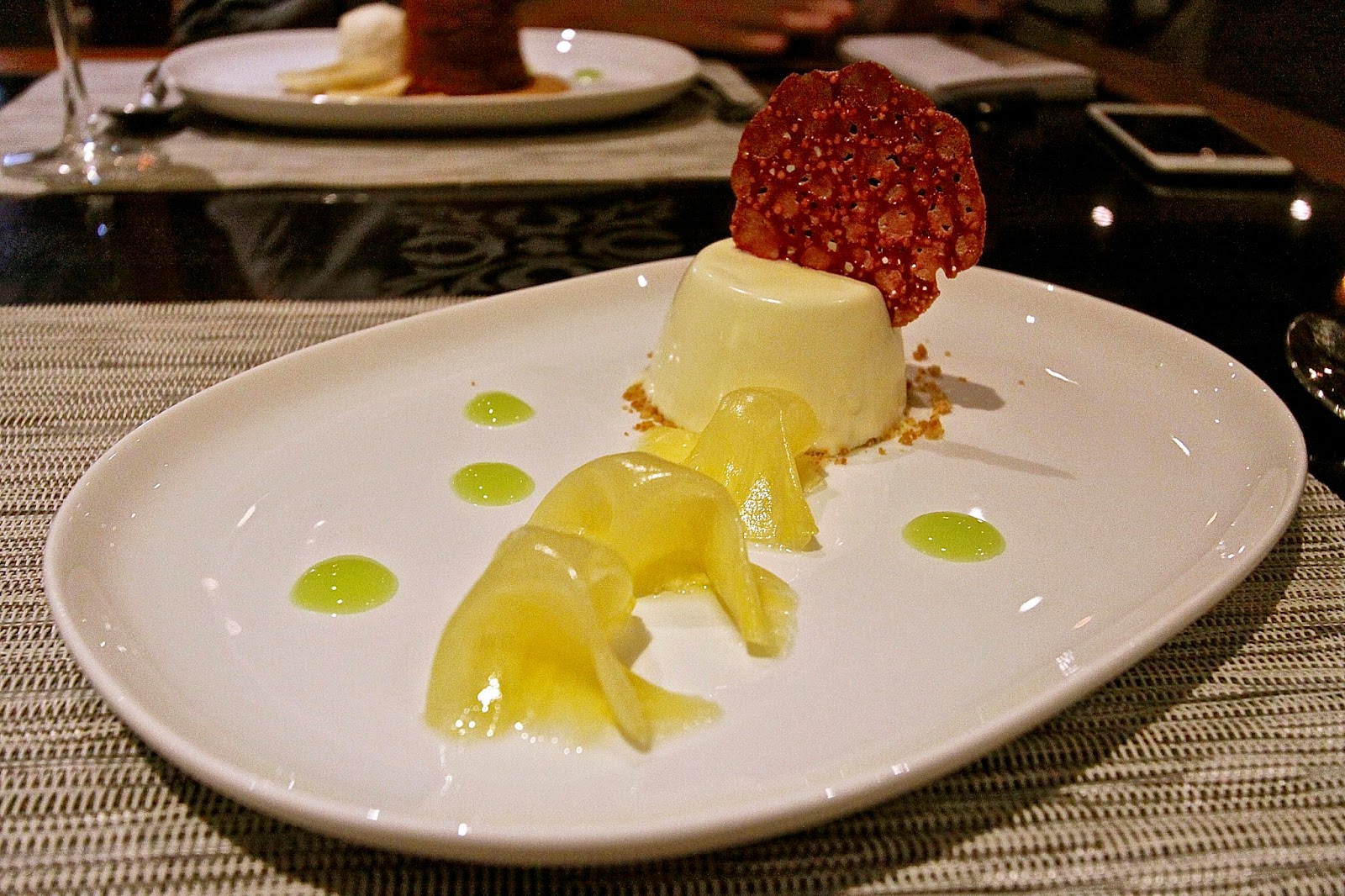
The Piña Colada panacotta, whilst innovative, had the consistency of a mousse and lacked the richness of the “cooked cream” that gives panacotta its name.
What We Drank: The drinks menu features classic cocktails (£9), champagne cocktails (£12) and a range of European and Asian beers (all around £5.50 a pint). Most of the wines are below £40 a bottle, with a good number under £30. There’s also a selection of Thai wines - most of which are World Wine Award winners - for £29 a bottle, and available in 175ml or 250ml glasses.
We opted for a bottle of the Thai Monsoon Valley Colombard, a World Wine Bronze Award-winning white. Although this grape originated in Southwest France, the wine shares the medium body and acidity of Sauvignon Blanc. It had notes of apple and grapefruit, making it a good partner to the spicy aromatic food.
For dessert, we had a glass of another Thai Monsoon Valley wine, this time a Late Harvest Chenin Blanc, which was well made.
Likes: The restaurant’s setting is impressive, and there can be few better London dining rooms in which to eat Thai food. The Kao Krieb Pak Moh (chicken-filled rice dumplings) and Phad Kiew Warn Ta Law (seafood green curry) were exceptional.
Dislikes: The desserts were unexciting, although the course was rescued by a very enjoyable Thai Chenin Blanc.
Verdict: Thai Cuisine is more diverse and complex than many restaurants do justice to. Nipa Thai’s soups and seafood dishes are well made, and the interior is eye-catching. With a number of good-value set menus, anyone looking to experience authentic Thai food should head to Nipa Thai. Recommended.
Welcome to The London Foodie
Reviews of London's Restaurants, Supper Clubs and Hotels, Wine Tastings, Travel Writing, and Home to the Japanese and French Supper Clubs in Islington
For the latest food events, restaurant openings, product launches and other food and drink related news, visit the sister site The London Foodie News
Showing posts with label By Area - Lancaster Gate. Show all posts
Tuesday, 14 April 2015
Thursday, 17 June 2010
London Restaurant Reviews – Awana, Satay House and Tukdin Flavours of Malaysia
I am enjoying the 2010 Malaysian Kitchen Campaign a great deal. The opportunity to find out more about one of the most fascinating but relatively undiscovered Asian cuisines (and eat a lot of it in the process), right here in London, is an opportunity not to be missed.
I was lucky enough to have been involved in this campaign for the launch of the Malaysian Dining Card at Kiasu (reviewed here), and more recently as part of a “Malaysian restaurant tour” which included Awana, Satay House and Tukdin.
The event was organised to showcase what these restaurants will be offering at the Malaysian Section of this year’s Taste of London Festival.
Awana
Our first stop was at the fine-dining restaurant “Awana” on well-heeled Sloane Avenue in Chelsea where we were warmly welcomed by Hailong Wang, the restaurant manager. The restaurant is very elegant - furnished with teak wood and batik silks, it feels chic and rather reminiscent of those large colonial homes still found in parts of Malaysia.
Having read some mixed reviews by fellow food bloggers, I had a few reservations about Awana and was half-expecting the food to be a let-down. We started with a demonstration of “roti canai” preparation at the restaurant’s Satay Bar, before sampling a selection of starters.
(Picture courtesy of Tehbus)
I was pleasantly surprised to find that the food was pretty much in keeping with the restaurant’s fine surroundings. The “Beef Curry Murtabak” was excellent as was the “Kueh pai tee” (top hats), and the “Sajian Laut Salad” (tiger prawn and crab meat with pomelo and sour mango salad). The satay skewers were also very flavoursome and the meat had been cooked perfectly.
These dishes tasted fresh and sophisticated and highlighted the chef’s culinary finesse. This was a very positive (and promising) introduction to Awana and what it has to offer. I look forward to returning there one day soon for a full dinner and a more detailed review.

Satay House
We were then whisked away to our next stop, “Satay House” in Paddington. The restaurant is small and casual with a modern feel about it.
(Picture courtesy of Tehbus)
Our first round of main courses was served at this delightful restaurant, and in my opinion, one of the most successful dishes was the “Udang Galah Goreng” (king prawns fried in turmeric, chillies, lime leaves and coconut milk). The prawns were meaty but still soft and their richness was offset by the lime’s citric flavours and the delicate coconut milk.
The “Rendang Daging” (slow cooked beef in spices, herbs and coconut milk) was also noteworthy. I enjoyed the rich flavours of cinnamon, cloves and star anise infused in the very tender meat.
I love aubergines and so quite enjoyed “Terong Goreng Berlada” (aubergines stir-fried with ground chillies and shrimps) despite feeling that it was a little overspiced.
Less successful dishes were the “Satay” (chicken and lamb skewers served with a peanut sauce) and the “Kway Teow Goreng” (stir-fried flat rice noodles with seafood, egg and vegetables).
The former was slightly on the tough side whereas the noodles lacked the delicious combination of flavours that I have experienced from this dish elsewhere.

Tukdin Flavours of Malaysia
Our final destination was at “Tukdin”, a charming little restaurant on Craven Road, Bayswater. The restaurant felt very Malay (as opposed to Hokkien-Chinese or Indian); the clientele appeared to be native, and wonderful smells of spices, coconut milk and grilled fish were wafting through the air as I came in.
It was nice to see entire Malay families eating together, and I could sense a delightful camaraderie among most customers who were probably regulars and clearly knew each other. Malaysia has three main ethnic groups – the Malays, Chinese and Indians. Since the Malays are predominantly Muslim, there was no alcohol or pork on the menu, and all the meat served was halal.
(Picture courtesy of Tehbus)
To kick off proceedings we had “Satay Goreng” (chicken served with peanut sauce) served off the skewer. The meat was sweet and had a delicious char-grilled flavour, and in my opinion, was the best “Satay” of the evening.
“Mee Goreng Mamak” (vegetarian fried noodles) was served next. The soft yellow noodles had a lovely richness, and a slight sweetness from the “kicap manis” (Malaysian sweet soy sauce). The noodles were stir-fried with chunky pieces of firm tofu and rice cakes and topped with ground peanuts and spring onions.
One of the best dishes was the “Ikan Rasa Khas” (sweet and sour sea bass). The fish had been cut up in chunky fillets, deep fried and topped with a delicious sweet and sour sauce made from tamarind and chillies.
I also enjoyed the “Daging Salai Masak Lemak Cili Api” (grilled beef in coconut sauce with lemongrass, turmeric and chilli). The combination of the creamy, sweet coconut milk with the tart lemongrass went particularly well with the grilled beef.
To accompany these main dishes, we had coconut and corn rice and Tukdin’s special mixed vegetables pickle called “Acar rampai”.
The “Kupang Berlada” (mussels in chilli sauce with lime leaves) was also excellent. I could taste a rich mix of flavours including pineapple, coconut milk and lime and with a touch of heat from the chillies. This was again a very good dish.
I enjoyed all three restaurants but felt that Tukdin was particularly special - the food was fantastic and great value, and I cannot wait to return. I would also like to revisit Awana for a more considered opinion. I strongly recommend trying some of these restaurants’ dishes available at Taste of Malaysia if you are planning a visit to Taste of London Festival this year (17 -20 June) in Regent’s Park.
Subscribe to:
Posts (Atom)


